
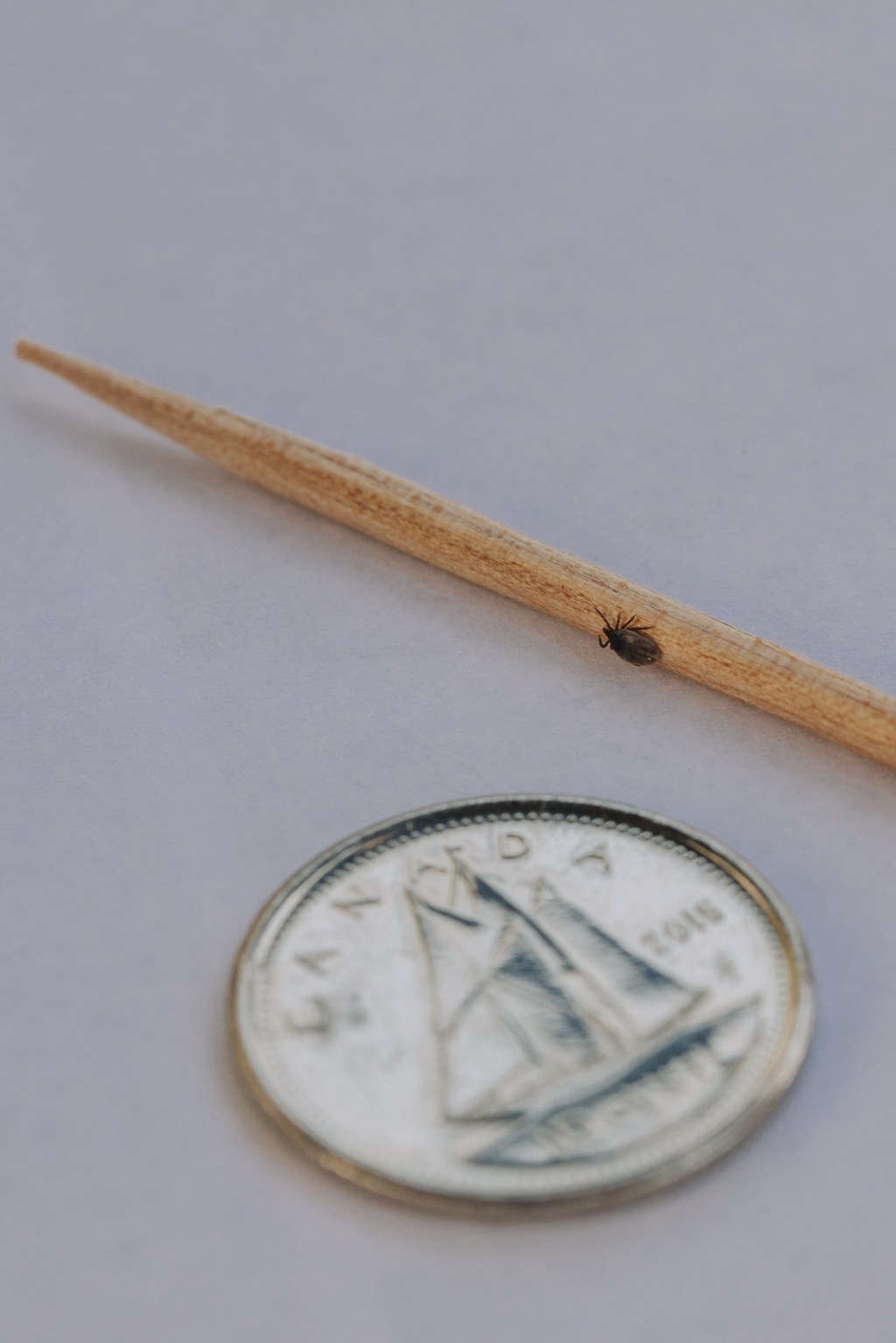
In late March to early June, you can usually find Stefan Iwasawa around Vancouver Island forested parks and trails monitoring outdoor areas for ticks by dragging a one-metre squared piece of white fabric along the ground hoping that ticks will latch on. This technique, known as tick-dragging, is one of the methods researchers use across Canada for tick surveillance.
With the increasing prevalence of tick-borne diseases in Canada, like Lyme disease, monitoring for ticks in the environment is essential to understanding and mitigating the spread infections. By bringing together scientists and researchers, like Stefan, the Canadian Lyme Disease Research Network (CLyDRN) has established a national surveillance system, the Canadian Lyme Sentinel Network (CaLSeN), that enhances Canada’s capacity to track ticks and the diseases they carry. The surveillance system includes sentinel regions which are 50 kilometer wide circular areas. Within each sentinel region there are 5 to 10 specific locations that field researchers will visit to collect data, including tick-dragging.
Given Canada’s vast geography, tracking Lyme disease and tick prevalence requires a broad network of fieldworkers and researchers collecting data across regions. Stefan, who is a project coordinator and vector specialist working with the Centre for Coastal Health and the BC Centre for Disease Control on the west coast, emphasized the logistical difficulties of local surveillance, let alone on a national scale: “Because Canada’s so big, even within regions, collecting data is always difficult. You try to do as many spots as you can. Although it would be impossible to surveil everywhere, being able to do the different sentinel regions across Canada gives you a real broad picture of what’s going on.”
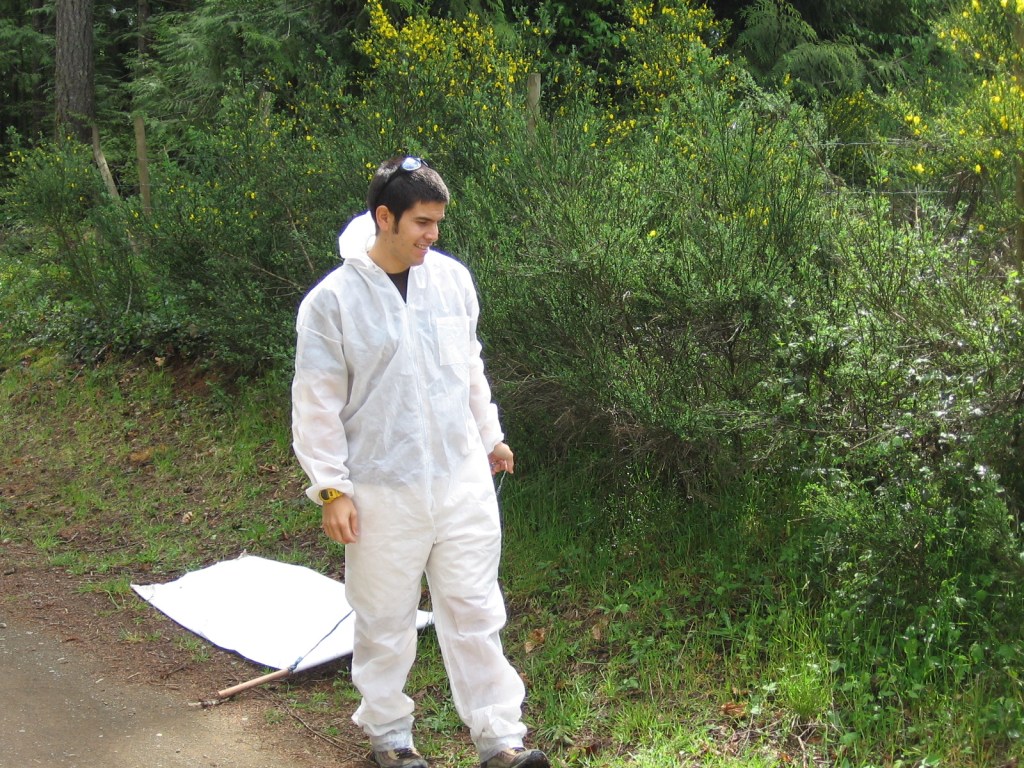
Image: Stefan Iwasawa engages in tick-dragging by pulling a white cloth over grass and low vegetation to collect ticks for research.
Collaboration and knowledge sharing among CLyDRN researchers contributed to the success of establishing sentinel surveillance sites. Camille Guillot, who began her work with CLyDRN as a doctoral trainee, helped develop the surveillance system. Her work began by examining tick trends in her local province of Quebec before expanding those methods and analysis to sites across the country: “CLyDRN gave us the platform to be able to do it at a larger scale and integrate local data. Tick-borne diseases especially Lyme disease, really kind of started emerging in eastern Canada: Nova Scotia, Ontario, and Quebec. So, we did have a few years of knowledge, but we know that it’s emerging throughout Canada and there’s different settings, different priorities, and so building from that knowledge we were able to go larger.” By combining data from multiple regions, this important surveillance initiative created a clearer picture of Lyme disease emergence across Canada.
It was through a culture of collaboration that CLyDRN researchers were able to develop this nationwide infrastructure for tick surveillance. CaLSeN’s director, Katie Clow, emphasizes the significance of this national surveillance work: “Establishing a national surveillance network is a big accomplishment. There are a lot of people involved, but the baseline and ongoing data it provides, that sort of base aspect of risk assessment, can’t be understated. It also provides a model for monitoring other emerging vector-borne diseases or other diseases in general. Sentinel surveillance is powerful.”
By combining their expertise and navigating logistical barriers, members of CLyDRN developed a surveillance network that provides key data informing public health. By the end of 2024, CaLSeN had established 200 surveillance sites across 39 sentinel regions in Canada. The success of this surveillance initiative highlights how collaboration and capacity building at a national scale is possible and necessary to address complex and emerging health challenges like Lyme disease and other tick-borne illnesses.
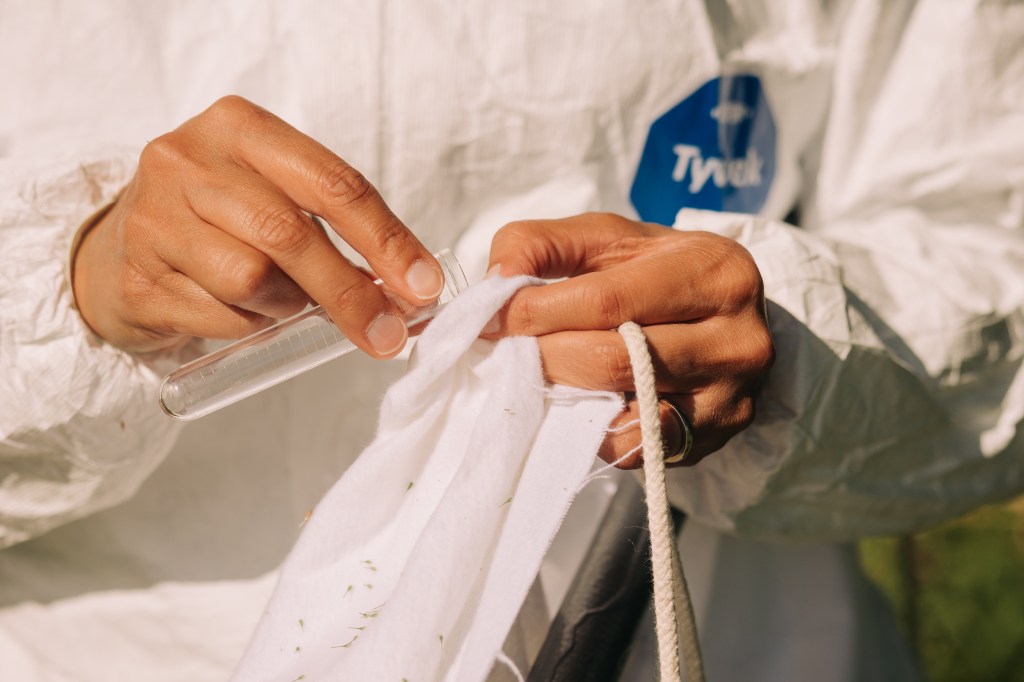
Image: A field researcher removes ticks from a white drag cloth and places them into a specimen tube after completing a tick-dragging survey in a grassy area.
Tick activity increases in Canada shortly after the winter thaw, making spring an ideal season for tick-dragging. If you’re in nature this spring, keep an eye out; you might spot Stefan and other field researchers tick-dragging, giving you a firsthand look at science in action. If you miss them in the spring, don’t worry, tick-dragging also happens in the fall from late September to early November.

 Ticknet
Leave a comment